
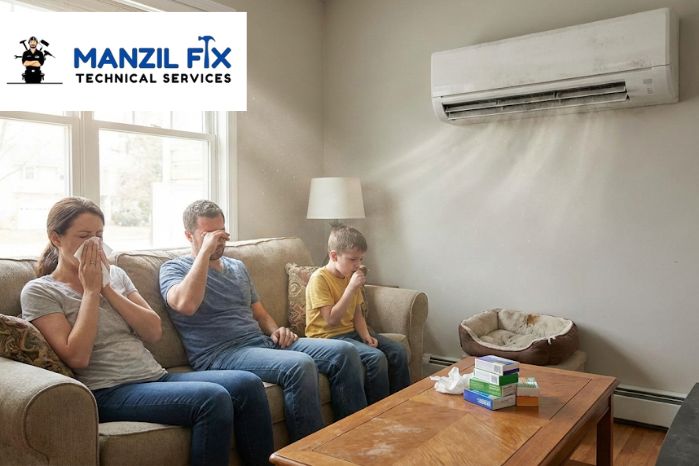
Seasonal allergies or a passing cold may be the cause of your family’s mysterious sneezing, watery eyes, or persistent coughing at home. However, your air conditioning system may be the true culprit. Yes, it is lurking in plain sight. Your home may be a health hazard due to a faulty AC. If that reassuring cool breeze is spreading a concoction of allergens. It may be time to get the best AC cleaning in Dubai.
Your family’s health should be safeguarded by your air conditioning system, not jeopardized. You can take preventive measures to guarantee that the air flowing through your house is safe and clean. This is done by being aware of how unclean air conditioning systems gather and disperse allergens. In addition to preventing expensive repairs, routine maintenance is very important for protecting your family’s health and establishing a genuinely comfortable living space.
How is Your AC Making Your Family Sick?
If you think your AC is causing allergies, here are some easy ways to prevent them.
How is Your AC Spreading Allergens?
Every time your air conditioning system cycles through your house, it gathers tiny particles from the surroundings. If your air conditioner isn’t cleaned and maintained regularly, it becomes what specialists refer to as an “allergen accumulator.” The dark, frequently damp environment of your air conditioning system makes for an ideal breeding ground for dust mites, pollen, pet fur, mold spores, and even pathogens.
Because these pollutants don’t just sit there silently, the issue becomes worse. These allergens are released into the air your family breathes each time your system activates. This results in an ongoing cycle of exposure that can lead to serious respiratory issues, allergic reactions, and asthma attacks, especially in young children, elderly family members, and people with underlying medical disorders.
The Problem of Mold Growth
Mold growth is perhaps the most worrying problem with neglected air conditioning systems. Condensation from air conditioners naturally creates moisture, which, when mixed with dust and organic debris, creates the perfect environment for mold colonies to grow. Spores from black mold and other types can spread throughout your home by growing on coils, in drip pans, and in ducts.
Beyond the usual symptoms of allergies, mold exposure can lead to major health issues. Individuals who are exposed to indoor mold may suffer from persistent exhaustion, headaches, skin irritation, and in extreme situations, more serious respiratory disorders. Long after the exposure is over, some people continue to have mold sensitivities.
What to Do?
Fortunately, with appropriate maintenance, this issue can be completely avoided. Depending on usage and household considerations like dogs or smoking, start by cleaning or replacing your air conditioning filters every one to three months. Upgrading to HEPA filters is a good idea because they are better at capturing tiny particles than regular filters.
Make an appointment to have expert AC maintenance at least once a year, preferably prior to periods of high demand. Before it becomes a serious issue, technicians can clean coils, check ductwork, clear drain lines, and spot possible mold growth. Professional duct cleaning can eliminate years’ worth of collected pollutants from houses with ongoing problems.
Additionally, to prevent the growth of mold, keep indoor humidity levels high. This is between thirty and fifty percent. Invest in a separate dehumidifier or use the dehumidification settings on your air conditioner.
Conclusion
This is how you can prevent allergies from spreading through your AC. If the allergies or mold growth still are not stopping, contact an expert immediately. For the best electrical work in Dubai, contact Manzil Fix UAE.
